Showing posts with label eagles. Show all posts

Tuesday, July 13, 2010

nature animals of different griffon vultures poster


 nature animals of different vultures poster

nature animals of different vultures poster


free downloading of baby griffon vulture

wild animals of griffon vulture habitat

flying bird griffon vulture size

flying bird griffon vulture size


himalayan griffon vulture wikipedia

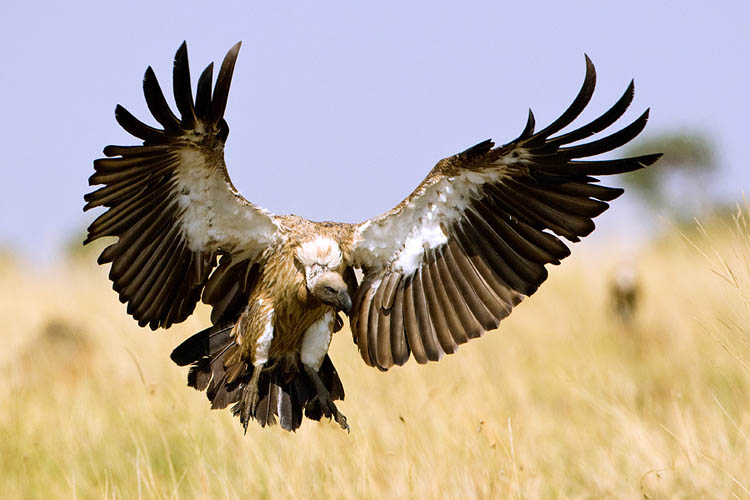
The Griffin Vulture (Gyps fulvus) is a large Old World vulture in the bird of prey family Accipitridae.The Griffin Vulture is 93–110 cm (37–43 in) long with a 230–269 cm (91–106 in) wingspan, and it weighs between 6 and 13 kg (13.2 and 29 lb). Hatched naked, it is a typical Old World vulture in appearance, with a very white bald head, very broad wings and short tail feathers. It has a white neck ruff and yellow bill. The buff body and wing coverts contrast with the dark flight feathers.
Like other vultures it is a scavenger, feeding mostly from carcasses of dead animals which it finds by soaring over open areas, often moving in flocks. It grunts and hisses at roosts or when feeding on carrion.It breeds on crags in mountains in southern Europe, north Africa, and Asia, laying one egg. Griffon Vultures may form loose colonies. The population is mostly resident.
for more pics...

african animals of ruppell's giffon vulture gallery


african animals of ruppell's giffon vulture altitude

 free downloading of griffon vulture with baby

free downloading of griffon vulture with baby


himalayan ruppell's griffon vulture wiki

eurasian ruppells griffon vulture pictures

wallpapers of ruppells vulture highest flying bird

Rüppell's Vultures are highly social, roosting, nesting, and gathering to feed in large flocks. They can travel fast at need, cruising at up to 35 kilometres per hour (22 mph), and will fly as far as 150 kilometres (93 mi) from a nest site to find food. Rüppell's Vultures commonly fly at altitudes ranging up to 6,000 metres (19,700 ft) and have been considered to be the world's highest flying bird after a Rüppell's Vulture was confirmed to have been ingested by a jet engine of an airplane flying over Abidjan, Côte d'Ivoire on November 29, 1973 at an altitude of 11,000 metres (36,100 ft). Rüppell's Vultures have a specialized variant of the hemoglobin alphaD subunit; this protein has a high affinity for oxygen, which allows the species to take up oxygen efficiently despite the low partial pressure in the upper troposphere.Rüppell's Vultures are creatures of the more arid and mountainous areas of Africa: particularly semi-desert and the fringes of deserts.
Adults are close to 1 metre (3.3 ft) in length, with a wingspan of around 2.6 metres (8.5 ft), and a weight that usually ranges from 7 to 9 kg (15 to 20 lb). Both sexes are alike: mottled brown or black overall with a whitish-brown underbelly and thin, dirty-white fluff covering the head and neck. The base of the neck has a white collar, the eye is yellow or amber, the crop patch deep chocolate-brown. Silent as a rule, they become vocal at the nest and when at a carcass, squealing a great deal.for more animals..

Monday, July 5, 2010

asian animals of black kite wallpapers


 asian animals of black kite photos

asian animals of black kite photos


free downloading pics of black kite wiki

flying birds of black kite eagle habitat

 different varities of eagle youtube
different varities of eagle youtube

 a group of black kite eagles posters
a group of black kite eagles posters

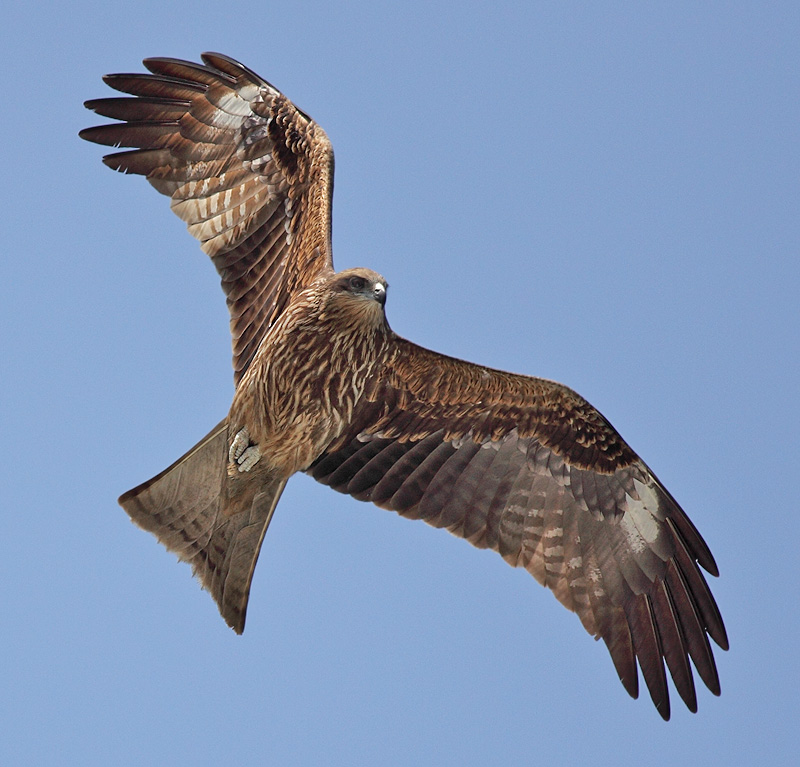
The Black Kite can be distinguished from the Red Kite by its slightly smaller size, less forked tail, visible in flight and generally dark plumage without any rufous. The sexes are alike. The upper plumage is brown but the head and neck tend to be paler. The patch behind the eye appears darker. The outer flight feathers are black and the feathers have dark cross bars and are mottled at the base. The lower parts of the body are pale brown, becoming lighter towards the chin. The body feathers have dark shafts giving it a streaked appearance. The cere and gape are yellow but the bill is black (unlike in the Yellow-billed Kite). The legs are yellow and the claws are black. They have a distinctive shrill whistle followed by a rapid whinnying call.
Black Kites are most often seen gliding and soaring on thermals as they search for food. The flight is buoyant and the bird glides with ease, changing directions easily. They will swoop down with their legs lowered to snatch small live prey, fish, household refuse and carrion. They are opportunist hunters and have been known to take birds, bats and rodents.They are attracted to smoke and fires, where they seek escaping insect prey.The typical clutch size is 2 or sometimes 3 eggs.The incubation period varies from 30-34 days. Chicks of the Indian population stayed at the nest for nearly two months.Chicks hatched later in European populations appeared to fledge faster. The care of young by the parents also rapidly decreased with the need for adults to migrate.Siblings show aggression to each other and often the weaker chick may be killed, but parent birds were found to preferentially feed the smaller chicks in experimentally altered nests.Newly hatched young have down (prepennae) which are sepiaon the back and black around the eye and buff on the head, neck and underparts. This is replaced by brownish gray second down (preplumulae). After 9 to 12 days the second down appears on the whole body except the top of the head. Body feathers begin to appear after 18 to 22 days. The feathers on the head become noticeable from the 24th to 29th day. The nestlings initially feed on food fallen at the bottom of the nest and begin to tear flesh after 33-39 days. They are able to stand on their legs after 17-19 days and begin flapping their wings after 27-31 days. After 50 days they begin to move to branches next to the nest.for more photos..

Thursday, March 25, 2010

nature animals of turkey vultures information


nature animals of turkey vulture information

free downloading pics of turkey vultures

pictures of bird turkey vulture habitat

pictures of bird turkey vulture habitat


wild animals of different turkeys youtube

wild animals of different turkeys youtube


latest images of turkey vulture wikipedia
The typical adult Turkey Vulture is from 66–81 cm (26–32 in) long with a 173–183 cm (68–72 in) wingspan and a weight of 1.4 kg (3.1 lb).It displays minimal sexual dimorphism; sexes are identical in plumage and in coloration, although the female is slightly larger.The body feathers are mostly brownish-black, but the flight feathers on the wings appear to be silvery-gray beneath, contrasting with the darker wing linings.The adult's head is small in proportion to its body and is red in color with few to no feathers. It also has a relatively short, hooked, ivory-colored beak.The irises of the eyes are gray-brown; legs and feet are pink-skinned, although typically stained white. The eye has a single incomplete row of eyelashes on the upper lid and two rows on the lower lid.
The two front toes of the foot are long and have small webs at their bases.Tracks are large, between 3.75 and 5.5 inches in length (9.5–14 cm) and 3.25 and 4 inches in width (8.2–10.2 cm), both measurements including claw marks.
to see more pictures....

african animals of egyptian vultures information


african animals of egyptian vultures information

african animals of egyptian vultures information


free downloading pics of egyptian wiki

different types of vultures youtube

wildlife animals of egyptian vulture habitat

pictures of egyptian vulture bird egg

pictures of egyptian vulture bird eggs

The adult Egyptian Vulture usually measures 85 cm from the point of the beak to the extremity of the tail feathers and 1.7 meters between the tips of the wings. It weighs about 2.1 kilograms.
The adult plumage is white, with some black feathers in the wings and tail. Due to its habits—stalking around carcasses on usually dusty ground to wait for its turn—the plumage dulls quickly, and birds before moult are beige rather than pure white. Also, individuals occasionally seem to "paint" themselves with soil containing iron oxide, as Lammergeiers do, turning their plumage a pinkish buff; hence the German name Schmutzgeier. Its facial skin is yellow, turning orange during nesting periods, and is devoid of feathers. The tail is diamond-shaped, so it is easily distinguished in flight. However, the shape of the tail means less speed and more manoeuvrability.
The nominate subspecies has a yellow bill with a black tip, whereas the smaller Indian race has an all-yellow bill.The nestlings are dark brown and gradually become lighter until they reach adulthood at the age of five.
for different images.....

Wednesday, February 10, 2010

wallpapers of animal pallid harrier eagle photos


wallpapers of animal pallid harrier eagles

free downloading pics of pallid wiki

african animals of harrier bird gallery

latest images of pallid harrier youtube

flying animals of pallid harrier habitat

flying animals of pallid harrier habitat

The Pallid Harrier is a migratory bird of prey of the harrier family. It breeds in southern parts of eastern Europe and central Asia and winters mainly in India and southeast Asia. It is a very rare vagrant to Great Britain and western Europe, although remarkably a juvenile wintered in Norfolk in the winter.This medium-sized raptor breeds on open plains, bogs and heathland. In winter it is a bird of open country.This is a typical harrier, with long wings held in a shallow V in its low flight. It also resembles other harriers in having distinct male and female plumages.The male is whitish grey above and white below, with narrow black wingtips. It differs from the Hen Harrier in its smaller size, narrower wings, pale colour different wing tip pattern.
The female is brown above with white upper tail coverts, hence females and the similar juveniles are often called "ringtails". Her underparts are buff streaked with brown. It is best distinguished from the female Hen Harrier on structure.
Pallid Harriers hunt small mammals, lizards and birds, surprising them as they drift low over fields and moors.The nest of this species is on the ground. Four to six whitish eggs are laid.
for different images.....

Tuesday, December 29, 2009

wallpapers of animal vultures bird posters


wallpapers of animal vultures posters

free downloading pics of vulture wiki

latest images of vulture bird

pictures of animal vulture eye habitat

wildlife vulture waiting for child to die

wildlife vulture waiting for child to die

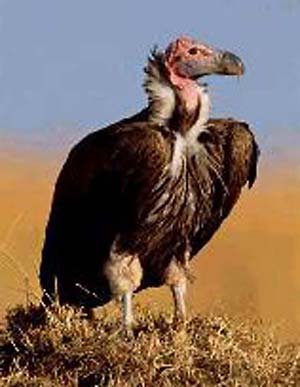
It is a scavenging bird, feeding mostly from animal carcasses animals which it finds by sight or by watching other vultures. Large carcasses, since they provide the most subsistence at a sitting, are preferred. Lappet-faced Vultures, perhaps more than any other vulture, will on occasion attack young and weak living animals and raid the nests of other birds. Locally, Lesser Flamingoes, among others, have been reported to be culled by Lappet-faces in this way.
It is about 95-115 cm (37-45 in) in body length, with a wingspan of 2.5-3 m (8.2-9.9 ft). Wild vultures, of the subspecies T. t. tracheliotus, range from 4.4 to 9.4 kg (9.8-20.7 lbs) and, in East Africa, average only 6.2 kg (13.6 lbs).[1][2] On the other hand, captive vultures of the slightly larger T. t. negevensis subspecies, weighed 6.5-9.2 kg (14.3-20.2 lbs) in males and 10.5-13.9 kg (23.1-30.6 lbs) in females.[3] They are the most powerful and aggressive of the African vultures and other vultures usually cede a carcass to the Lappet-faced Vulture. This is often beneficial to the less powerful vultures because the Lappet-face can tear through the tough hides and muscles of large mammals that the others cannot penetrate, although hyenas are even more efficient in this regard.
for more birds...

Friday, December 18, 2009

wallpapers of eagle long legged buzzard photos


wallpapers of eagle long legged buzzard information

free downloading pics of long legged wiki

 latest images of legged buzzard habitat
latest images of legged buzzard habitat

different types of eagles youtube

long legged buzzard eagles photos
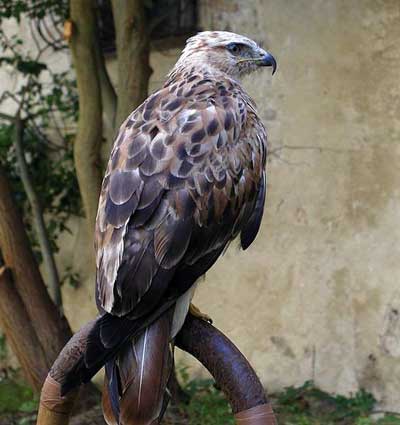
It is similar in appearance to the Rough-legged Buzzard (Buteo lagopus), but larger (approximate length 60–65cm / 24") and more robust. There are many different colour forms, but usually Long-leggeds have a clear orange tint to the plumage, red or orange tail, pale head and largely white underwings. There is usually a distinctive black carpal patch and dark trailing edge to the wing. The rump and "trousers" are often dark or deep rufous. Plumage varies from ghostly pale individuals to very dark ones.for more images...

african animals of crested caracara eagle poster


african animals of crested caracara eagle information

 free downloading pics of crested wiki
free downloading pics of crested wiki

nature animals of caracara eagle habitat

pictures of crested caracara eagle gallery

pictures of crested caracara eagle gallery


different types of eagles youtube
The Crested Caracara has a body length of 19 - 23 inches, a 4-foot wingspan, and weighs 1 3/4 - 3 1/2 pounds. The bird’s weight varies greatly depending on where it lives.Crested Caracaras build a massive stick nest in a palm, cactus, tree, or on the ground. The female usually lays 2 - 3 eggs that are incubated for 28 - 32 days. The young caracaras have a drawn out fledging period, taking up to 3 months before they are flying as independent birds.
The Crested Caracara usually feeds on carrion, but they will take advantage of any food opportunity by eating small mammals, amphibians, reptiles, turtles, fish, crab, eggs, insects, worms, and nestling birds. Caracaras hunt live food on the ground or take food from other birds.
for more pics....

Monday, November 23, 2009

wallpapers of animal spot bellied eagle owl pictures


wallpapers of animal spot bellied eagle owl pictures

wallpapers of animal spot bellied eagle owl pictures


The Spot-bellied Eagle-owl, also known as the Forest Eagle-owl, Bubo nipalensis is a large bird of prey with a formidable appearance. It is a forest-inhabiting species found in southern and south-eastern Asia. This, like its relative the Barred Eagle-owl, is one of the species that would have to be moved into Ketupa if that genus is to be retained, according to mtDNA cytochrome b sequence data.

The Spot-bellied Eagle-owl is nocturnal and spends the day hidden among foliage of a large forest tree. At dusk it becomes active and hunts small mammals, reptiles, and birds up to the size of junglefowl.
for more pics.....

Get latest Animals Pics & Photos

Enter your email address:

Delivered by FeedBurner