Showing posts with label Cranes. Show all posts

Friday, July 18, 2014

Free downloading pics of sandhill cranes gallery


The sandhill crane (Grus canadensis) is a species of large crane of North America and extreme northeastern Siberia.This is the most important stopover area for the nominotypical subspecies, the lesser sandhill crane (Grus canadensis canadensis), with up to 450,000 of these birds migrating through annually.The average weight of the larger males is 4.57 kg (10.1 lb), while the average weight of females is 4.02 kg (8.9 lb), with a range of 2.7 to 6.7 kg (6.0 to 14.8 lb) across the subspecies.Sandhill cranes have red foreheads, white cheeks and long dark pointed bills. In flighing, their long dark legs trail behind, and their long necks keep straight. Immature birds have reddish brown upperparts and gray underparts.The both male and female look alike sizes vary among the different subspecies, the average height of these birds is around 80 to 122 cm (2 ft 7 in to 4 ft 0 in).Their wing chords are typically 41.8–60 cm (16.5–23.6 in), tails are 10–26.4 cm (3.9–10.4 in), the exposed culmens are 6.9–16 cm (2.7–6.3 in) long and the tarsi measure 15.5–26.6 cm (6.1–10.5 in).These cranes frequently give a loud trumpeting call that suggests a French-style "r" rolled in the throat, and they can be heard from a long distance.The cranes stand close together, calling in a synchronized and complex duet. The female makes two calls for every one from the male.

sandhill cranes are large wingspans, typically 1.65 to 2.29 m (5 ft 5 in to 7 ft 6 in), make them very skilled soaring birds, similar in style to hawks and eagles. Utilizing thermals to obtain lift, they can stay aloft for many hours, requiring only occasional flapping of their wings and consequently expending little energy.Sandhill cranes are mainly herbivorous, but eat various types of food, depending on availability. They often feed with their bills down to the ground as they root around for seeds and other foods, in shallow wetlands with vegetation or various upland habitats. Cranes readily eat cultivated foods such as corn, wheat and sorghum. Waste corn is useful to cranes preparing for migration, providing them with nutrients for the long journey. Among northern races of sandhill cranes, the diet is most varied, especially among breeding birds. They variously feed on berries, small mammals, insects, snails, reptiles and amphibians.This crane nest sites are usually marshes, bogs or swales, though occasionally on dry land. Females lay one to three (usually two) oval, dull brown eggs with reddish markings. Both parents incubate the eggs for about 30 days. The chicks are precocial; they hatch covered in down, with their eyes open and able to leave the nest within a day. The parents brood the chicks for up to three weeks after hatching, feeding them intensively for the first few weeks, then gradually less frequently until they reach independence at nine or ten months old.for different pics....

Friday, January 10, 2014

african animals of brown pelican cranes gallery

The Brown Pelican (Pelecanus occidentalis) is a small pelican found in the Americas. It is one of the best known and most prominent birds found in the coastal areas of the southern and western United States. It is one of only 3 pelican species found in the Western Hemisphere. This is one of the only two pelican species which feeds by diving into the water.These birds are the smallest of the eight species of pelican, although it is a large bird in nearly every other regard. It is 106–137 cm (42–54 in) in length, weighs from 2.75 to 5.5 kg (6.1 to 12 lb) and has a wingspan from 1.83 to 2.5 m (6.0 to 8.2 ft). Through most of its range, the brown pelican is an unmistakable bird. Like all pelicans, this species has a very large bill, 28 to 34.8 cm (11 to 13.7 in) long in this case, with a gular pouch on the bottom for draining water when it scoops out prey. The head is white but often gets a yellowish wash in adult birds. The bill is grayish overall in most birds, though breeding birds become reddish on the underside of the throat. The back, rump, and tail are streaked with gray and dark brown, sometimes with a rusty hue. In adult pelicans, the breast and belly are a blackish-brown and the legs and feet are black. The juvenile is similar but has a brownish-gray neck and white underparts.

These birds nest in colonies, often on islands and/or in mangroves. Male pelicans pick out the nesting sites and perform an "advertising" display which attracts the females. Once a pair forms a bond, overt communication between them is minimal. Pelican nesting peaks during March and April; nests are in colonies either in trees, bushes, or on the ground (the latter usually on islands that terrestrial predators cannot access). Those placed in trees are rather flimsy and made of reeds, grasses, straw, and sticks; if on the ground, nests consist of a shallow scrape lined with feathers and a rim of soil built 10–26 cm (3.9–10 in) above the ground. Their young are hatched in broods of about 2–3 and are naked and helpless upon hatching. Incubation is roughly 28–30 days. Both parents actively care for the young. Young pelicans start to walk independently at about 35 days old in ground nest, but do not leave treetop nests for up to 68–88 days. In the 8–10 month period they are cared for, the nestling pelicans are fed by regurgitation around 70 kg (150 lb) of fish.The younger birds reach sexual maturity (and full adult plumage) at anywhere from two to five years of age. Predation is occasional at colonies and predators of eggs, young and the rare adult pelicans can include gulls, raptors (especially bald eagles), foxes, skunks and feral cats. In areas where their ranges' overlap, American alligators may sometimes pick off fledging pelicans. Predation is likely reduced if the colony is on an island. Like all pelicans, Brown Pelicans are highly sensitive to disturbances by humans (often tourists or fishermen) at their nest and may abandon their nest if stressed as such.[4] Due to their size, the non-nesting adults are rarely predated.for cute pics.....

Friday, July 15, 2011

beautiful birds of grey heron cranes gallery


beautiful birds of grey heron cranes poster

pictures of animal grey heron crane wikipedia

african animals of grey heron flying images

free downloading pics of grey heron habitat

wallpapers of bird grey heron facts

 different types of animal cranes youtube
different types of animal cranes youtube

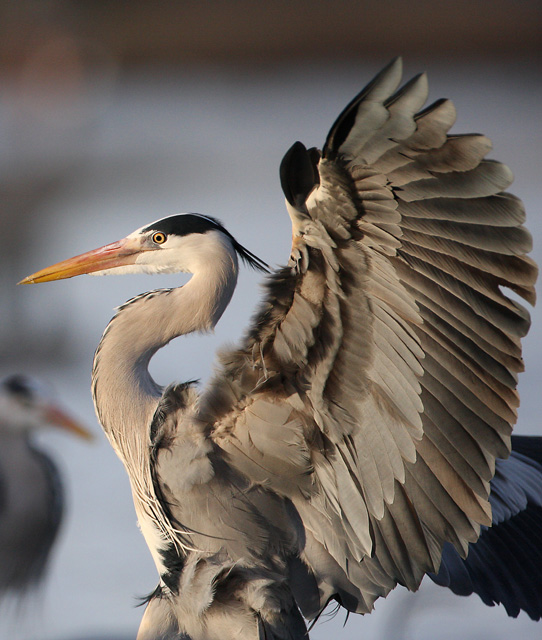
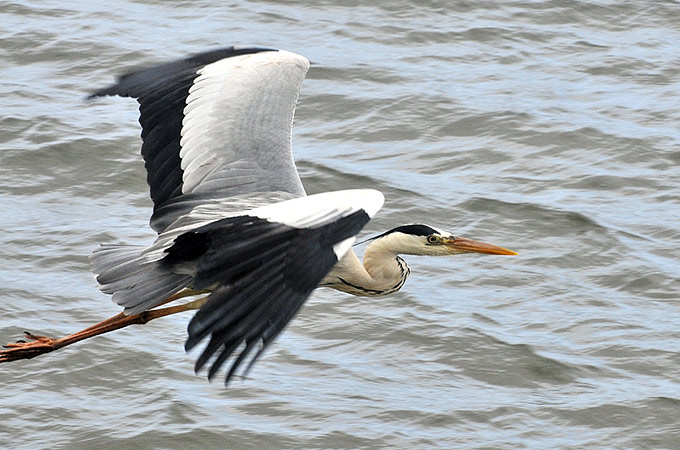
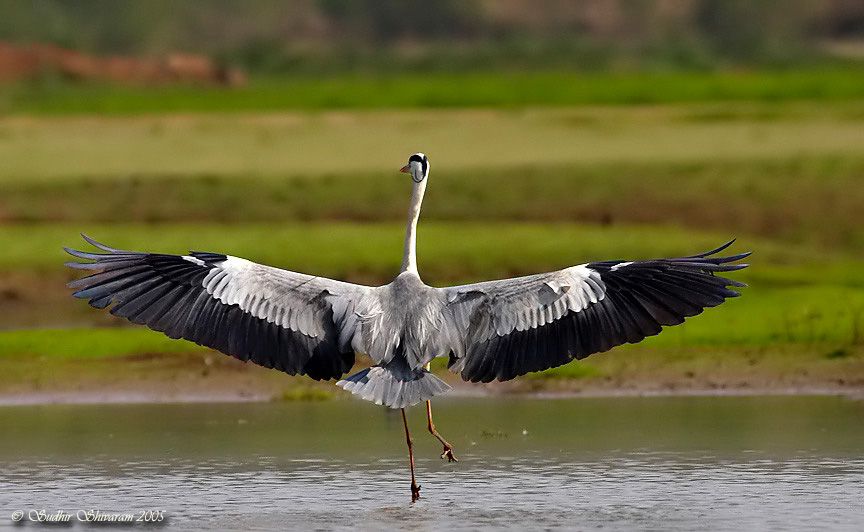
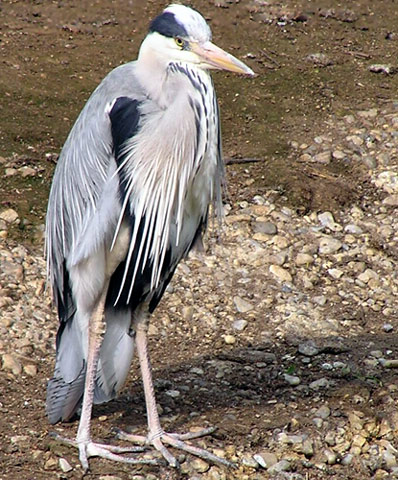
The Grey Heron (Ardea cinerea), is a wading bird of the heron family Ardeidae, native throughout temperate Europe and Asia and also parts of Africa.It is resident in the milder south and west, but many birds retreat in winter from the ice in colder regions. It has become common in summer even inside the Arctic circle along the Norwegian coast.It is a large bird, standing 90–100 cm tall, with a 175–195 cm wingspan and a weight of 1–2 kg. Its plumage is largely grey above, and off-white below. Adults have a white head with a broad black supercilium and slender crest, while immatures have a dull grey head. It has a powerful, pinkish-yellow bill, which is brighter in breeding adults. It has a slow flight, with its long neck retracted (S-shaped). This is characteristic of herons and bitterns, and distinguishes them from storks, cranes and spoonbills, which extend their necks. The call is a loud croaking "fraaank". The Australian White-faced Heron is often incorrectly called Grey Heron. In Ireland the grey heron is often colloquially called " crane ".
It feeds in shallow water, catching fish, frogs, and insects with its long bill. Herons will also take small mammals, reptiles and occasionally warbler nestlings, plovers, young and adult snipes, takes ducklings and tern chicks and other small birds.It will often wait motionless for prey, or slowly stalk its victim.for more pics....

Wednesday, April 13, 2011

wallpapers of animal saddle billed stork cranes infromation


wallpapers of animal saddle billed stork cranes

wallpapers of animal saddle billed stork cranes


free downloading of saddle billed stork wiki

latest pics of saddle billed stork cranes

african animals of saddle billed stork flying

different types of billed stork cranes youtube

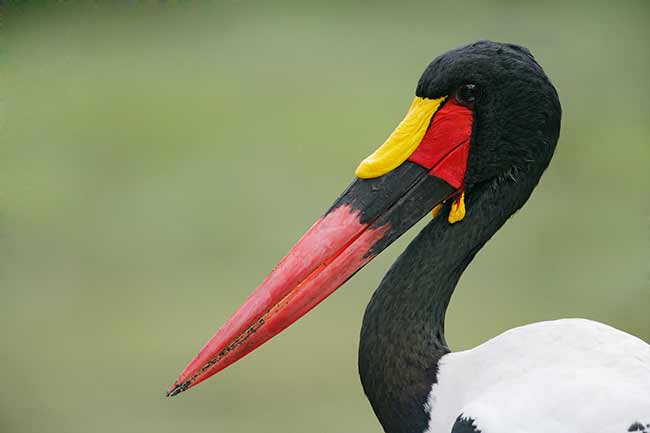
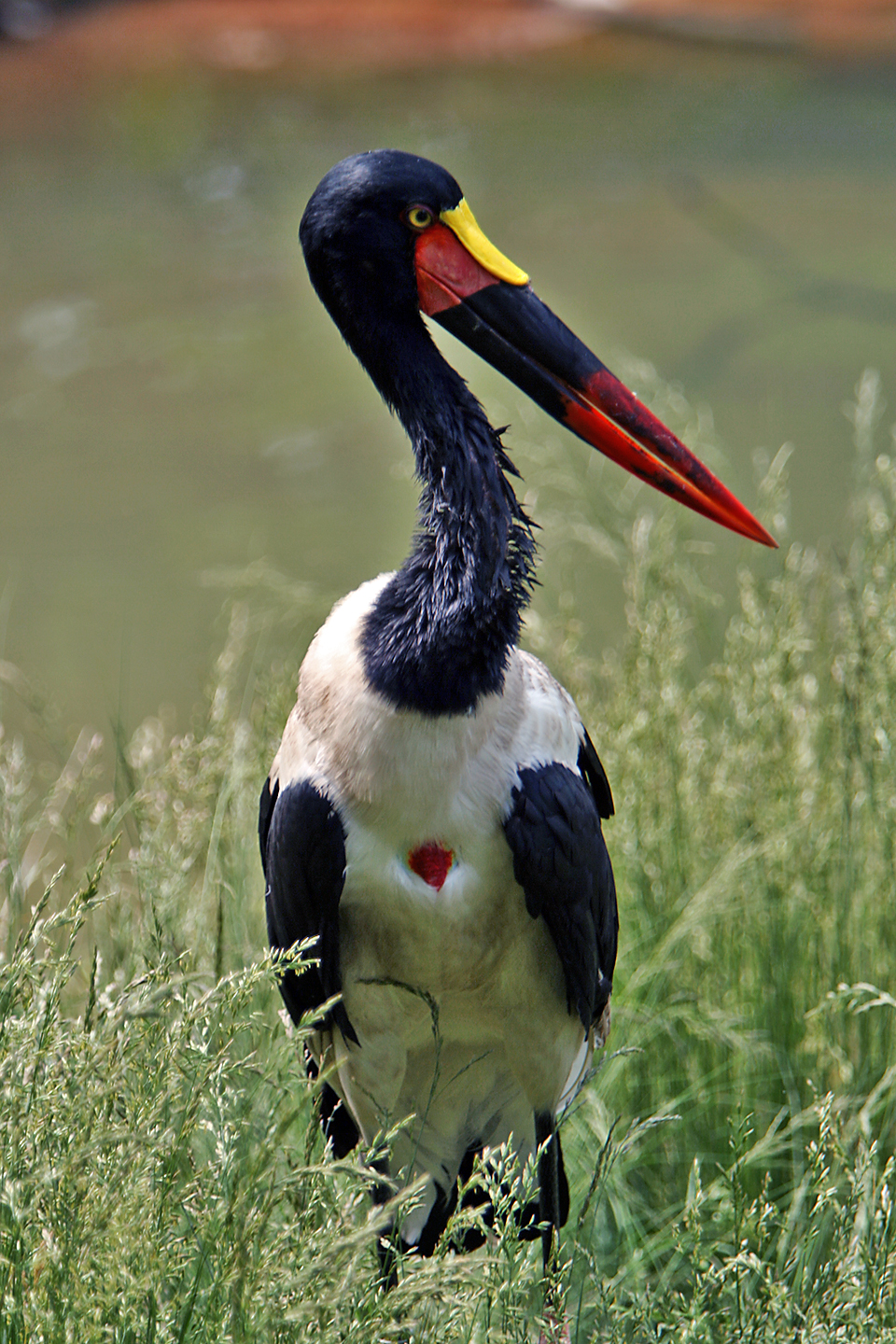
This is a huge bird that regularly attains a height of 150 cm (5 feet) and a 270 cm (9 feet) wingspan. The male is larger and heavier than the female, with a range of 5.1-7.5 kg, the female is usually between 5 and 6.9 kg. It is probably the tallest, if not the heaviest, of the storks. Females are distinctly smaller than the males. The sexes can be readily distinguished by the golden yellow irises of the female and the brown irises of the male.

It is spectacularly plumaged, identical in male and female. The head, neck, back, wings, and tail are iridescent black, with the rest of the body and the primary flight feathers being white. Juveniles are browner grey in plumage. The massive bill is red with a black band and a yellow frontal shield (the “saddle”). The legs and feet are black with pink knees. On the chest is a bare red patch of skin, whose colour darkens during breeding season.

The Saddle-billed Stork breeds in forested waterlands and other floodlands in tropical lowland. It builds a large, deep stick nest in a tree, laying one or two white eggs weighing about 146g each. It does not form breeding colonies, and is usually found alone or in pairs. The incubation period is 30–35 days, with another 70 – 100 days before the chicks fledge.This animal like most of its relatives, feeds mainly on fish, frogs and crabs, but also on small birds and reptiles . They move in a deliberate and stately manner as they hunt, in a similar way to the larger herons.for cute animals....

Tuesday, March 8, 2011

wallpapers of animal brolga cranes photos


wallpapers of animal brolga cranes gallery

free downloading pics of brolga wikipedia

african animals of brolga crane habitat

african animals of brolga crane habitat


 pictures of different brolga cranes youtube
pictures of different brolga cranes youtube

latest images of brolga bird collections

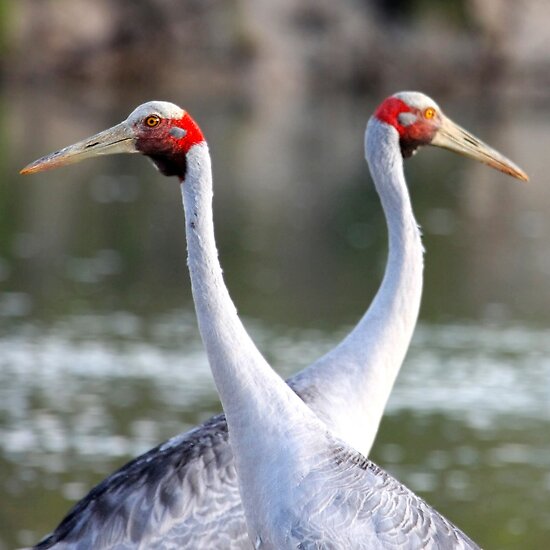
The full-grown Brolga is a tall, mid-grey to silver-grey crane, 0.7–1.3 m (3.3–4.3 ft) high, with a wingspan of 1.7–2.4 m (5.6–7.9 ft), and a broad red band extending from the straight, bone-coloured bill around the back of the head. Juveniles lack the red band. Adult males average at a little under 7 kg (15 lb), females a little under 6 kg (13 lb). The weight can range from 3.7 to 8.7 kg (8.1-19.2 lb).

The Brolga can easily be confused with the Sarus Crane, however the latter's red head colouring extends partly down the neck while the Brolga's is confined to the head. Additionally, in Australia the range of the Sarus is limited to a few scattered localities in northern Australia, compared to the more widespread distribution of the Brolga.

Brolga are omnivorous and eat a variety of wetland plants, insects, invertebrates, and amphibians. They also eat wetland and upland plants, seeds, mollusks, and crustaceans. Northern Australian populations of Brolga are fond of the tubers of the bulkuru sedge which they dig holes to extract but this is not available south of Brisbane.for more pics...

Saturday, July 10, 2010

famous cranes of australian white ibis wallpapers


famous cranes of australian white ibis wallpapers

famous cranes of australian white ibis wallpapers


Australian white ibis diet

Australian white ibis diet


free downloading pics of baby ibis wiki

free downloading pics of baby ibis wiki


 a group of Australian white ibis pictures
a group of Australian white ibis pictures

beautiful flying animal Australian white ibis

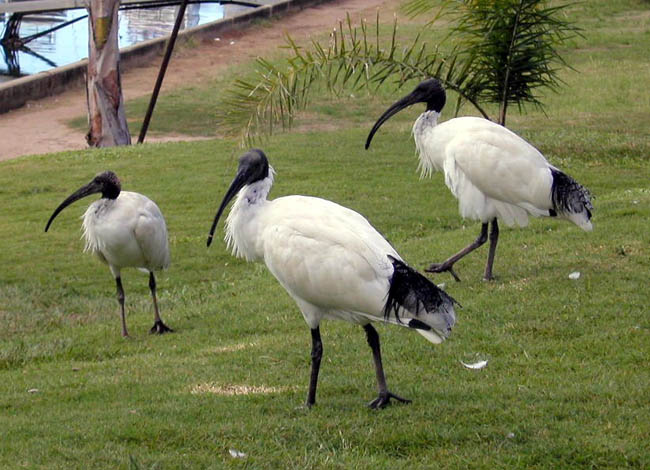
The Australian White Ibis is around 65–75 cm (25–30 in) long and has a bald black head and neck and a long black downcurved beak, measuring over 16.7 cm (6.6 in) in the male, and under in the female. There is some sexual dimorphism in size, as the slightly heavier male weighs 1.7–2.5 kg (3.7-5.5 lb) compared to the 1.4–1.9 kg (3.1–4.2 lb) female. The body plumage is white although it may become brown-stained. Inner secondary plumes are displayed as lacy black 'tail' feathers. The upper tail becomes yellow when the bird is breeding. The legs and feet are dark and red skin is visible on the underside of the wing. Immature birds have shorter bills.The head and neck are feathered in juveniles.This ibis feeds on various fish, frogs and other water creatures, and also insects and garbage.Breeding season varies with the location within Australia, generally August to November in the south, and February to May, after the Wet Season, in the north. The nest is a shallow dish-shaped platform of sticks, grasses or reeds, located in trees and generally near a body of water such as river, swamp or lake. Ibis commonly nest near other waterbirds such as egrets, herons, spoonbills or cormorants. Two to three dull white eggs are laid measuring 65 mm × 44 mm. The clutch is then incubated for 21–23 days. Hatchlings are altricial, that is, they are naked and helpless at birth, and take 48 days to fledge.for more pics...

american animals of white ibis cranes posters


american animals of  white ibis cranes posters
american animals of white ibis cranes posters

free downloading pics of white ibis wiki

nature animals of white ibis pictures

nature animals of white ibis pictures


flying birds of white ibis habitat

different types of ibis scientific name

different types of ibis scientific name


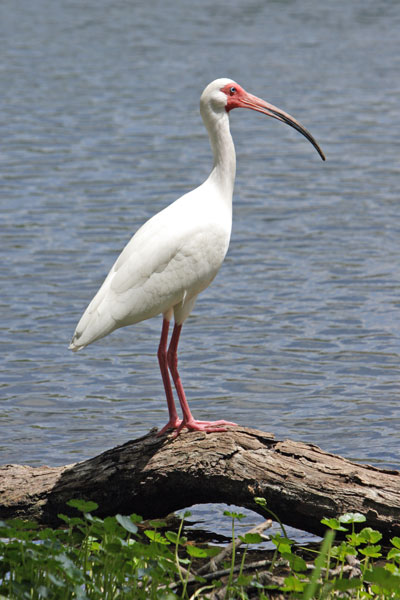
The american white ibis occurs in marshy wetlands and pools near the coast. It also occurs on mowed grass, lawns, and has become common in some city parks, where it can be found feeding alone or with other Ibis. It builds a stick nest in trees, bushes, or over water, and 2 to 5 eggs are typically laid. White ibises are monogamous and colonial, usually nesting in mixed colonies with other wading species.This ibis feeds by probing with its long, downcurved beak. Its diet consists of various fish, frogs and other water creatures, as well as insects and small reptiles.Adults are 65 cm long with a 95 cm wingspan. They have all-white plumage except for black wingtips (visible in flight) and reddish bills and legs. The red bill blends into the face of breeding birds; non-breeding birds show a pink to red face.

Wednesday, July 7, 2010

wallpapers of animal black winged stilt poster


wallpapers of animal  black winged stilt gallery

wallpapers of animal black winged stilt gallery


free downloading pics of black winged wiki

cute animals of baby black winged stilts images

different types of cranes youtube

different types of cranes youtube


nature animal black winged stilt flying

The black winged stilt is 33–36 cm long. They have long pink legs, a long thin black bill and are blackish above and white below, with a white head and neck with a varying amount of black. Males have a black back, often with greenish gloss. Females' backs have a brown hue, contrasting with the black remiges. In the populations that have the top of the head normally white at least in winter, females tend to have less black on head and neck all year round, while males often have much black, particularly in summer. This difference is not clear-cut, however, and males usually get all-white heads in winter.
Immature birds are grey instead of black and have a markedly sandy hue on the wings, with light feather fringes appearing as a whitish line in flight.These birds pick up their food from sand or water. They mainly eat insects and crustaceans.The nest site is a bare spot on the ground near water. These birds often nest in small groups, sometimes with Avocets.for different pics..

Monday, May 3, 2010

nature animals of pond heron cranes gallery


nature animals of Chinese pond heron cranes

free downloading of chinese pond heron wiki

different types of cranes youtube

indian animals of pond heron crane details

 wallpapers of baby indian pond heron cranes
wallpapers of baby indian pond heron cranes
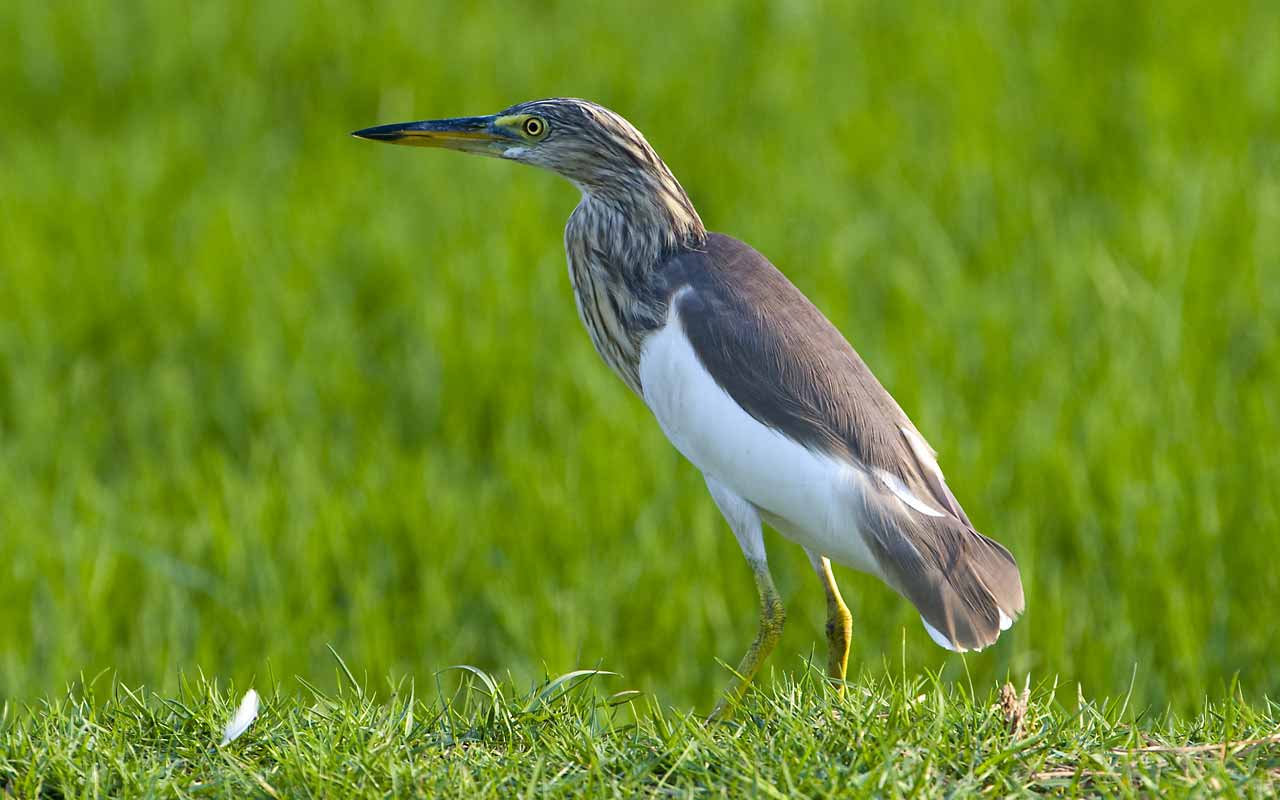
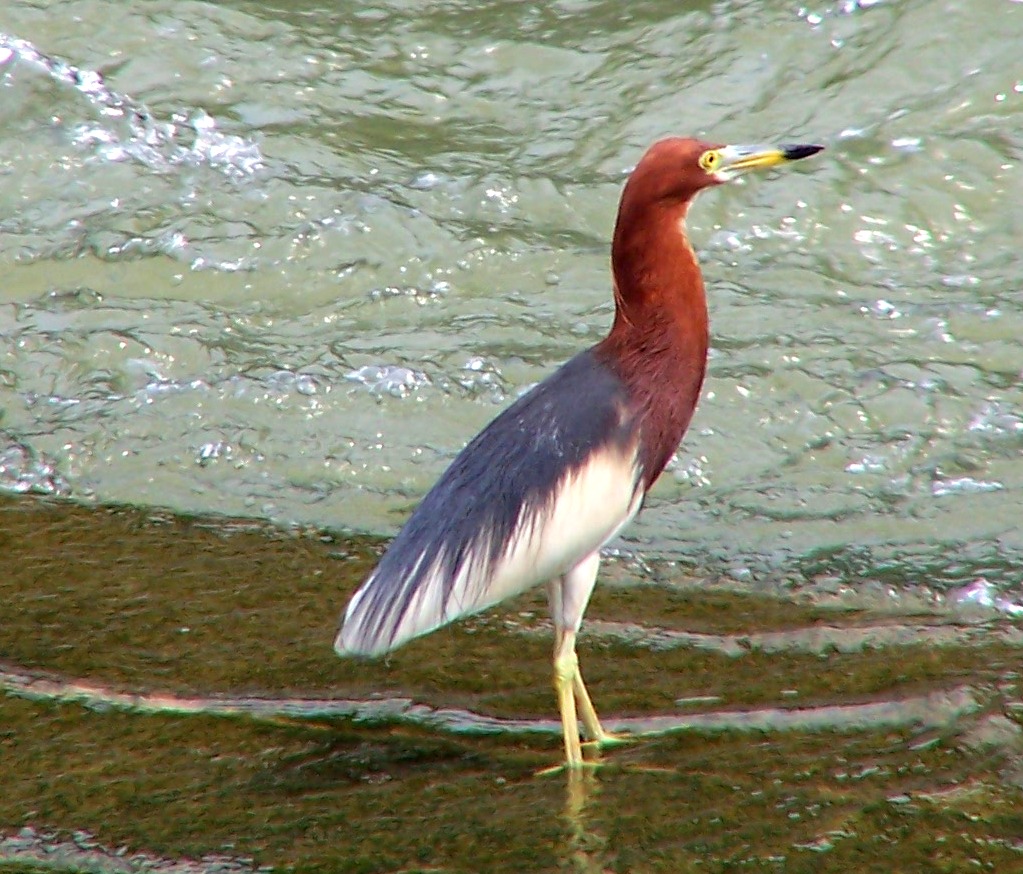
The Chinese Pond Heron is typically 47 cm long with white wings, a yellow bill with a black tip, yellow eyes and legs. Its overall colour is red, blue and white during breeding season, and greyish-brown and flecked with white at other times.
Its food consists of insects, fish, and crustaceans. The Chinese Pond Heron often nests in mixed-species heronries. It lays a clutch of 3-6 blue-green eggs.
for more pics......
Get latest Animals Pics & Photos

Enter your email address:

Delivered by FeedBurner