Showing posts with label camels. Show all posts

Monday, July 21, 2014

latest images of animal bactrian camels posters


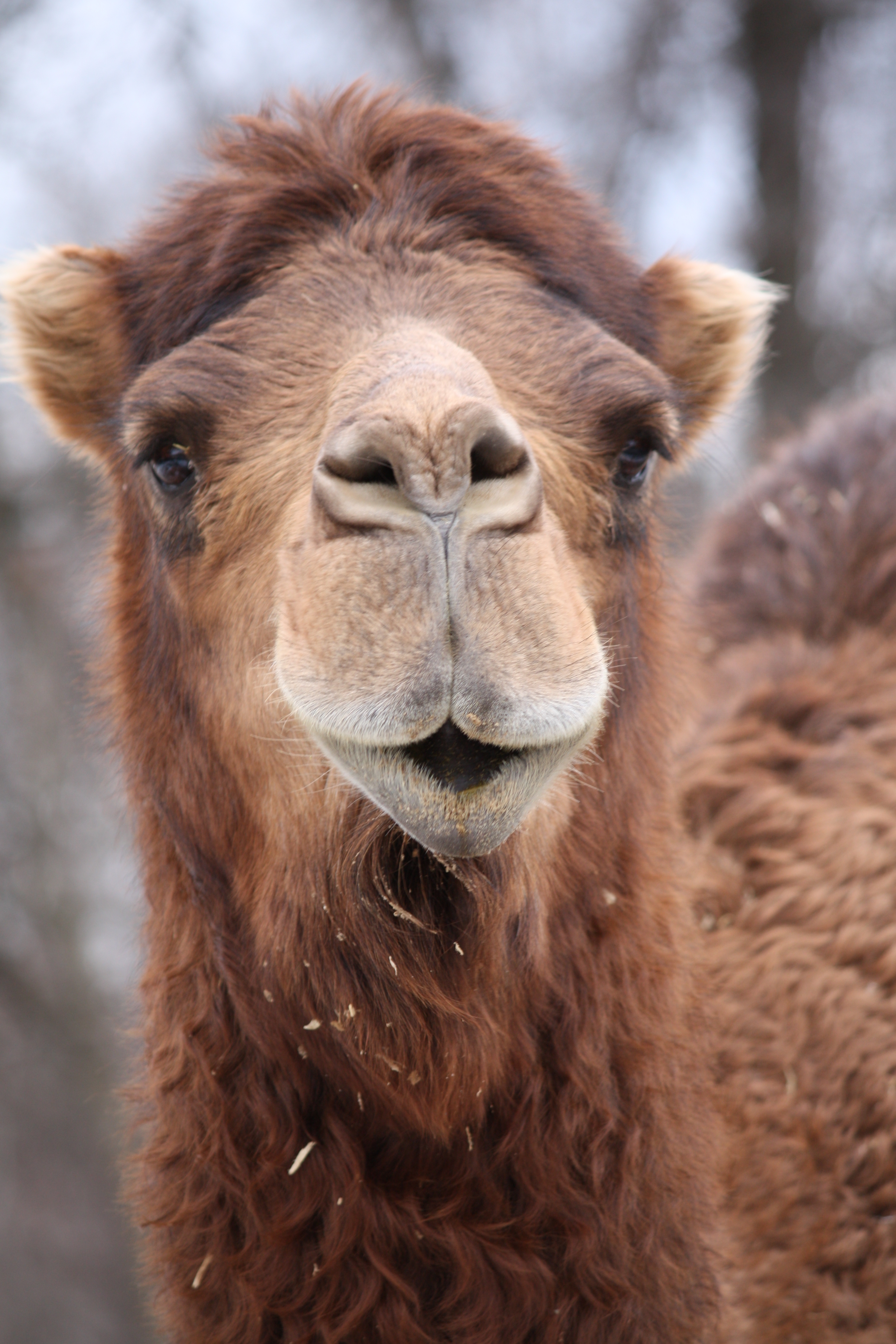
The Bactrian camel (Camelus bactrianus) is a large, even-toed ungulate native to the steppes of Central Asia. Of the two species of camel, it is by far the rarer.The Bactrian camel has two humps on its back, in contrast to the single-humped dromedary camel.This camel is the largest mammal in its native range and the shoulder height is from 180 to 230 cm (5.9 to 7.5 ft), head-and-body length is 225–350 cm (7.38–11.48 ft) and the tail length is 35–55 cm (14–22 in). At the top of the humps, the average height is 213 cm (6.99 ft). Body mass can range from 300 to 1,000 kg (660 to 2,200 lb), with males often being much larger and heavier than females. Its long, wooly coat varies in colour from dark brown to sandy beige. There is a mane and beard of long hair on the neck and throat, with hairs measuring up to 25 cm (9.8 in) long. The shaggy winter coat is shed extremely rapidly, with huge sections peeling off at once, appearing as if sloppily shorn off. There are two humps on the back, which are composed of fat (not water as is sometimes thought). The face is typical of a camelid, being long and somewhat triangular, with a split upper lip. There are long eyelashes, which, along with the sealable nostrils, help to keep out dust in the frequent sandstorms which occur in their natural range. The two broad toes on each foot have undivided soles and are able to spread widely as an adaptation to walking on sand. The feet are very tough, as befits an animal of extreme environments.

Bactrian camels are migratory, and their habitat ranges from rocky mountain massifs to flat arid desert, stony plains and sand dunes. Conditions are extremely harsh – vegetation is sparse, water sources are limited and temperatures are extreme, ranging from as low as −40 °C in winter to 40 °C in summer.These camels are exceptionally adept at withstanding wide variations in temperature – ranging from freezing cold to blistering heat. They have a remarkable ability to go without water for months at a time, but when water is available they may drink up to 57 liters at once. When well fed, the humps are plump and erect, but as resources decline the humps shrink and lean to the side. When moving faster than a walking speed they pace, by stepping forwards with both legs on the same side (as opposed to trotting, using alternate diagonals as done by most other quadrupeds). Speeds of up to 65 kilometres per hour (40 mph) have been recorded but they rarely move this fast.
These bactrian camels are diurnal, sleeping in the open at night and foraging for food during the day. They are primarily herbivorous. They are able to eat plants that are dry, prickly, salty and bitter and can ingest virtually any kind of vegetation. When other nutrient sources are not available, these camels may feed on carcasses, gnawing on bones, skin, or various different kinds of flesh. In more extreme conditions, they may eat any material they find, which has included rope, sandals, and even tents. Their ability to feed on a wide range of foods allows them to live in areas with sparse vegetation. With tough mouths that can withstand sharp objects such as thorns, the digestion process begins. The first time food is swallowed it is not fully chewed. The partly masticated food (called cud) goes into the stomach and later is brought back up for further chewing.The lifespan of Bactrian camels is estimated at up to 50 years, often 20 to 40 in captivity.for cute pics....

Monday, August 2, 2010

latest images of dromedary camels gallery


 latest images of dromedary camel pictures
latest images of dromedary camel pictures

 free downloading pics of camel wikipedia

free downloading pics of camel wikipedia


african animals of dromedary camel with baby

african animals of dromedary camel with baby


different types of camels youtube

wallpapers of dromedary camels habitat

The dromedary camel is a large even-toed ungulate with one hump on its back. Its native range is unclear, but it was probably the Arabian Peninsula. The domesticated form occurs widely in North Africa and the Middle East,Adult males grow to a height of 1.8–2.0 m, and females to 1.7–1.9 m. The weight is usually in the range of 400–600 kg for males, with females being 10% lighter.They are also noted for their thick eyelashes and small, hairy ears. They show remarkable adaptability in body temperature, from 34 °C to 41.7 °C, this being an adaptation to conserve water.The dromedary is taller and faster with a rider they can maintain 8-9 mph (13-14.5 km/h) for hours at a time. By comparison, a loaded Bactrian camel moves at about 2.5 mph (4 km/h).for more pics...

Get latest Animals Pics & Photos

Enter your email address:

Delivered by FeedBurner