Showing posts with label Squirrels. Show all posts

Monday, June 23, 2014

famous animals of american badger collections


American badger habitat is typefied by open grasslands with available prey (such as mice, squirrels, and groundhogs). The species prefers areas with sandy loam soils where it can dig more easily for its prey, such as prairie regions.This animal has most of the general characteristics common to badgers; with stocky and low-slung bodies with short, powerful legs, they are identifiable by their huge foreclaws (measuring up to 5 cm in length) and distinctive head markings. Measuring generally between 60 to 75 cm (23.6 to 29.5 inches) in length, males of the species are slightly larger than females (with an average weight of roughly 7 kg (15.5 pounds) for females and up to almost 9 kg (19.8 pounds) for males). Northern subspecies such as T. t. jeffersonii are heavier than the southern subspecies. In the fall, when food is plentiful, adult male badgers can exceed 11.5 kg (25.3 pounds),except for the head, the American badger is covered with a grizzled, silvery coat of coarse hair or fur. Its triangular face shows a distinctive black and white pattern, with brown or blackish "badges" marking the cheeks and a white stripe extending from the nose to the base of the head. In subspecies the white head stripe extends the full length of the body, to the base of the tail.

Badgers sometimes use abandoned burrows of other animals such as foxes or animals similar in size. They will sometimes form a mutually beneficial relationship with coyotes. Because coyotes are not very effective at digging rodents out of their burrows, they will chase the animals while they are above ground. Badgers, in contrast, are not fast runners, but are well adapted to digging. When hunting together, the two animals effectively leave little escape for prey in the area.The American badger is a fossorial carnivore. It preys predominantly on pocket gophers,ground squirrels,moles, marmots,prairie dogs,pika,woodrats,kangaroo rats,deer mice,and voles, often digging to pursue prey into their dens, and sometimes plugging tunnel entrances with objects.They also prey on ground-nesting birds, such as the bank swallow or sand martin and burrowing owl, and lizards, amphibians, carrion, fish, skunks,insects, including bees and honeycomb, and some plant foods such as corn,peas, green beans, mushrooms and other fungi, and sunflower seeds.The average longevity in the wild is 9–10 years and the record is 14 years;a captive American badger lived at least 15 years and five months.These animal occur primarily in grasslands, parklands, farms, and other treeless areas with friable soil and a supply of rodent prey.They are also found in forest glades and meadows, marshes, brushy areas, hot deserts, and mountain meadows.for cute pics.....

Friday, May 30, 2014

wildlife animals of american mink images collection

Mink is a common name for an alert, semiaquatic, carnivorous mammal of the Mustelidae family which also includes otters, weasels, badgers, wolverines, and polecats.The American mink is larger and more adaptable than the European mink. It is sometimes possible to distinguish between the 2 species; European mink always have a large white patch on the upper lip, whereas the American species sometimes does not. Therefore, any mink without a patch can be identified as an American mink, but individuals with a patch cannot be positively identified without examination of the skeleton.

The fur of the American mink has been highly prized for its use in clothing, with hunting being replaced by farming. Its treatment has also been a focus of animal rights and animal welfare activism.This animal oil is used in some medical products and cosmetics, as well as to treat, preserve, and waterproof leather.Both the American and European mink are semiaquatic carnivores. Their diet mostly consists of fish, small rodents, amphibians, crustaceans, and insects depending on its ecological niche. Voles are one of the primary targets for both mink species and as a result of this, some vole species are experiencing a significant population decline.To see more pics.......

Thursday, May 23, 2013

asian animals of alpine marmot picture gallery

The Alpine Marmot (Marmota marmota) is a species of marmot found in mountain areas of central and southern Europe. Alpine marmots live at heights between 800 and 3,200 metres in the Alps, Carpathians, Tatras, the Pyrenees and Northern Apennines in Italy.An adult alpine marmot may stand at 18 cm (7.1 in) at the shoulder. They reach between 42 and 54 cm (17 and 21 in) in length, not with the tail, which measures between 13 to 16 cm (5.1 to 6.3 in) on average. The body mass is significantly lighter in spring, when these animal weigh 2.8 to 3.3 kg (6.2 to 7.3 lb), than in fall, when they weigh 5.5 to 8 kg (12 to 18 lb).The alpine marmot is sometimes considered the largest squirrel species, although the closely related hoary marmot is sometimes heavier. Its coat is a mixture of blonde, reddish and dark gray fur. While most of the alpine marmot's fingers have claws, its thumbs have nails.They have also seen with sub-populations in the Pyrenees, Massif Central, Jura, Vosges, Black Forest, Apennine Mountains, High Tatras, and Romanian Carpathians. Marmots are abundant in their core population in the Romanian Carpathians, for example, the population is estimated at 1,500 individuals.These animals prefers alpine meadows and high-altitude pastures and colonies, where they live in deep burrow systems situated in alluvial soil or rocky areas.

Alpine marmots eat plants such as grass and herbs, as well as grain, insects, spiders and worms. They prefer young and tender plants over any other kind, and hold food in their forepaws while eating. They mainly emerge from their burrows to engage in feeding during the morning and afternoon, as they are not well suited to heat, which may results in them not feeding at all on very warm days. When the weather is suitable, they will consume large amounts of food in order to create a layer of fat on their body, enabling them to survive their long hibernation period.Their fur becomes the same colour as other alpine marmots by the end of the summer, and after two years they will have reach their full size. If kept in captivity, alpine marmots can live up to 15–18 years.for more pics.....

Monday, April 29, 2013

wallpapers of animal marmota monax squirrel gallery

The groundhog (Marmota monax), also known as a woodchuck, whistle-pig, or in some areas as a land-beaver, is a rodent of the family Sciuridae, belonging to the group of large ground squirrels known as marmots. Other marmots, such as the yellow-bellied and hoary marmots, live in rocky and mountainous areas, but the woodchuck is a lowland creature.This animal is the largest sciurid in its geographical range, typically measuring 40 to 65 cm (16 to 26 in) long (including a 15 cm (6 in) tail) and weighing 2 to 4 kg (4 to 9 lb). In areas with fewer natural predators and large amounts of alfalfa, groundhogs can grow to 80 cm (30 in) and 14 kg (31 lb). Groundhogs are well adapted for digging, with short but powerful limbs and curved, thick claws. Unlike other sciurids, the groundhog's spine is curved, more like that of a mole, and the tail is comparably shorter as well—only about one-fourth of body length. Suited to their temperate habitat, groundhogs are covered with two coats of fur: a dense grey undercoat and a longer coat of banded guard hairs that gives the groundhog its distinctive "frosted" appearance.

In the wild, groundhogs can live up to six years, with two or three being average. In captivity, groundhogs are reported to live from 9–14 years. Common predators for groundhogs include wolves, coyotes, foxes, bobcats, bears, large hawks, and dogs. Young groundhogs are often at risk for predation by snakes, which easily enter the burrow.In the wild, groundhogs can live up to six years, with two or three being average. In captivity, groundhogs are reported to live from 9–14 years. Common predators for groundhogs include wolves, coyotes, foxes, bobcats, bears, large hawks, and dogs. Young groundhogs are often at risk for predation by snakes, which easily enter the burrow.

Mostly herbivorous, groundhogs primarily eat wild grasses and other vegetation, including berries and agricultural crops, when available.Groundhogs also eat grubs, grasshoppers, insects, snails and other small animals, but are not as omnivorous as many other Sciuridae. Like squirrels, they also have been observed sitting up eating nuts such as shagbark hickory, but unlike squirrels, do not bury them for future use. Groundhogs hydrate through eating leafy plants rather than drinking from a water source.for more pics....

Tuesday, February 5, 2013

Indian animals of golden mantled ground squirrels photos

The golden-mantled ground squirrel (Callospermophilus lateralis) is a type of ground squirrel found in mountainous areas of western North America. It eats seeds, nuts, berries, insects, and underground fungi. It is preyed upon by hawks, jays, weasels, foxes, bobcats, and coyotes. A typical adult ranges from 23 to 30 centimetres (9.1–12 in) in length. The golden-mantled ground squirrel can be identified by its chipmunk-like stripes and coloration, but unlike chipmunks, it lacks any facial stripes. It is commonly found living in the same habitat as Uinta chipmunks.
The golden-mantled ground squirrel is similar to chipmunks in more than just its appearance. Although it is a traditional hibernator, building up its body fat so to survive the winter asleep, it is also known to store some food in its burrow, like the chipmunk, for consumption upon waking in the spring. Both the golden-mantled ground squirrel and the chipmunk have cheek pouches for carrying food. Cheek pouches allow them to transport food back to their nests and still run at full speed on all fours. Golden-mantled ground squirrels dig shallow burrows up to 30 metres (98 ft) in length with the openings hidden in a hollow log or under tree roots or a boulder. The female gives birth to a single litter of 4–6 young each summer.This squirrel is abundant throughout its range and is equally at home in a wide variety of forest habitats as well as rocky meadows, and even sagebrush flats.for different animals...

Saturday, May 22, 2010

african animals of marmot squirrels poster


latest images of marmot squirrel gallery

latest images of marmot squirrel gallery


 free downloading pics of marmot wiki
free downloading pics of marmot wiki

 nature animals of marmot squirrel habitat
nature animals of marmot squirrel habitat

 different types of squirrels youtube
different types of squirrels youtube

pictures of squirrel marmot information
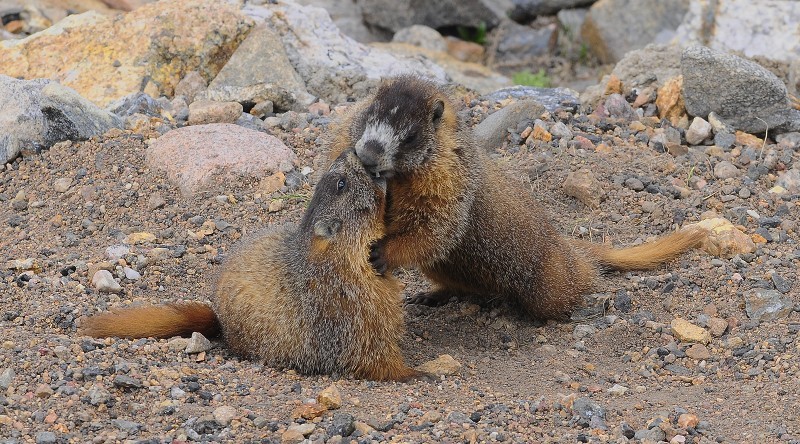
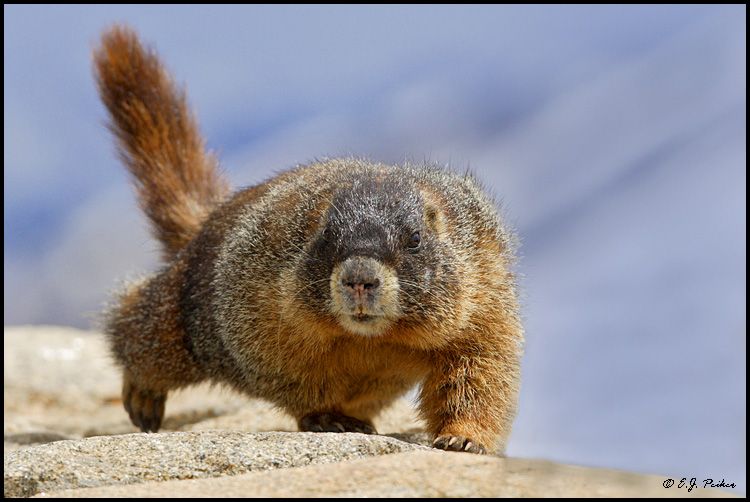
Marmots usually weigh between 5 and 11 pounds (2 and 5 kg) when fully grown. They get fatter in the fall just before hibernating.marmots reproduce when about two years old, and may live up to an age of 15 years. They reside in colonies; a colony is a group of about ten to 20. Each male marmot digs a burrow soon after he wakes up from hibernation. He then starts looking for females, and by summer has up to four females living with him. Litters usually average 4-5 offspring per female.
for more pics....
Tuesday, May 18, 2010

latest images of different beavers gallery


latest images of different beavers posters

free downloading pics of beaver wiki

pictures of american beavers youtube

water animals of american beavers images

videos of north american beaver habitat
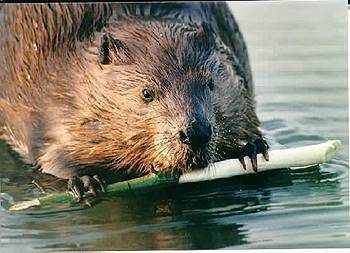
This beaver is the largest rodent in North America and the third largest rodent in the world, after the South American capybara and the Eurasian beaver. Adults usually weigh 15 to 35 kg (33–77 lbs), with 20 kg (44 lbs) a typical mass, and measure around 1 m (3.3 ft) in total body length. Very old individuals can weigh as much as 45 kg (100 lbs).
Beavers are mainly active at night. They are excellent swimmers but are more vulnerable on land and tend to remain in the water as much as possible. They are able to remain submerged for up to 15 minutes. The flat, scaly tail is used to signal danger and also serves as a source of fat storage.The beaver's fur consists of long, coarse outer hairs and short, fine inner hairs (see Double coat). The fur has a range of colors but usually is dark brown. Scent glands near the genitals secrete an oily substance known as castoreum, which the beaver uses to waterproof its fur.
for more animals...

Saturday, February 20, 2010

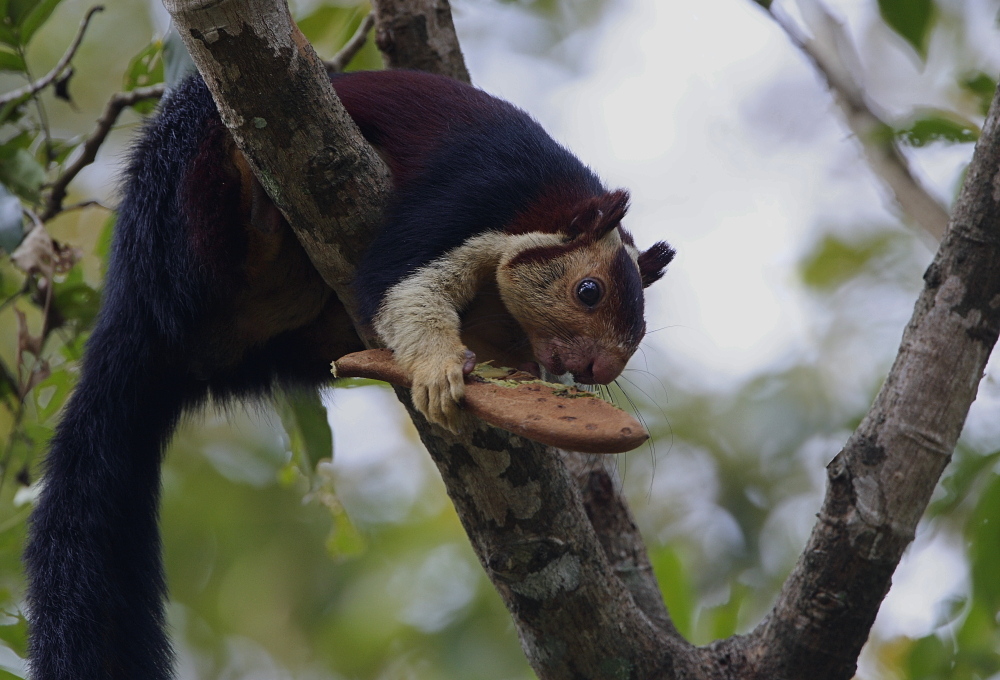
latest images of malabar gaint squirrels posters


latest images of malabar gaint squirrels posters

 free downloading pics of malabar wiki
free downloading pics of malabar wiki

nature animals of malabar squirrel habitat

different types of squirrels youtube

a group of malabar gaint squirrels

a group of malabar gaint squirrels

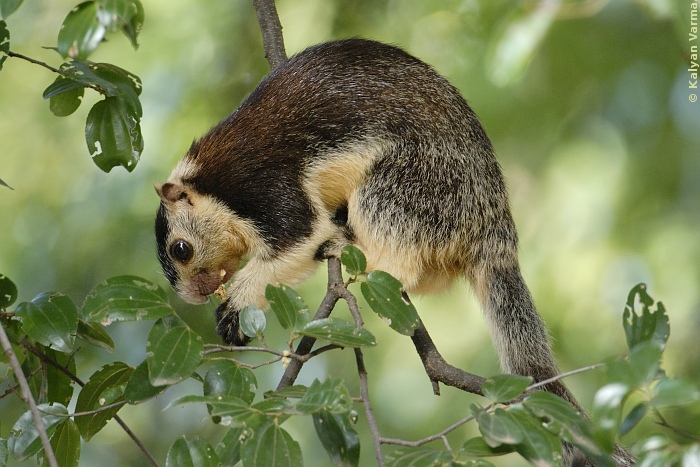
The colours involved can be creamy-beige, buff, tan, rust, brown, or even a dark seal brown.The underparts and the front legs are usually cream coloured, the head can be brown or beige, however there is a distinctive white spot between the ears. Adult head and body length varies between 14–16 in (36–41cm) and the tail length is approximately 2 ft (0.61m). Adult weight - 2 kg (4.41lb).
for different images....

Get latest Animals Pics & Photos

Enter your email address:

Delivered by FeedBurner